

Your Guide to Buying and Selling Old Vehicles in India: Top Platforms and Expert Tips
Navigate India’s booming used vehicle market with top platforms, detailed steps, and pro tips for scam-free deals in 2025
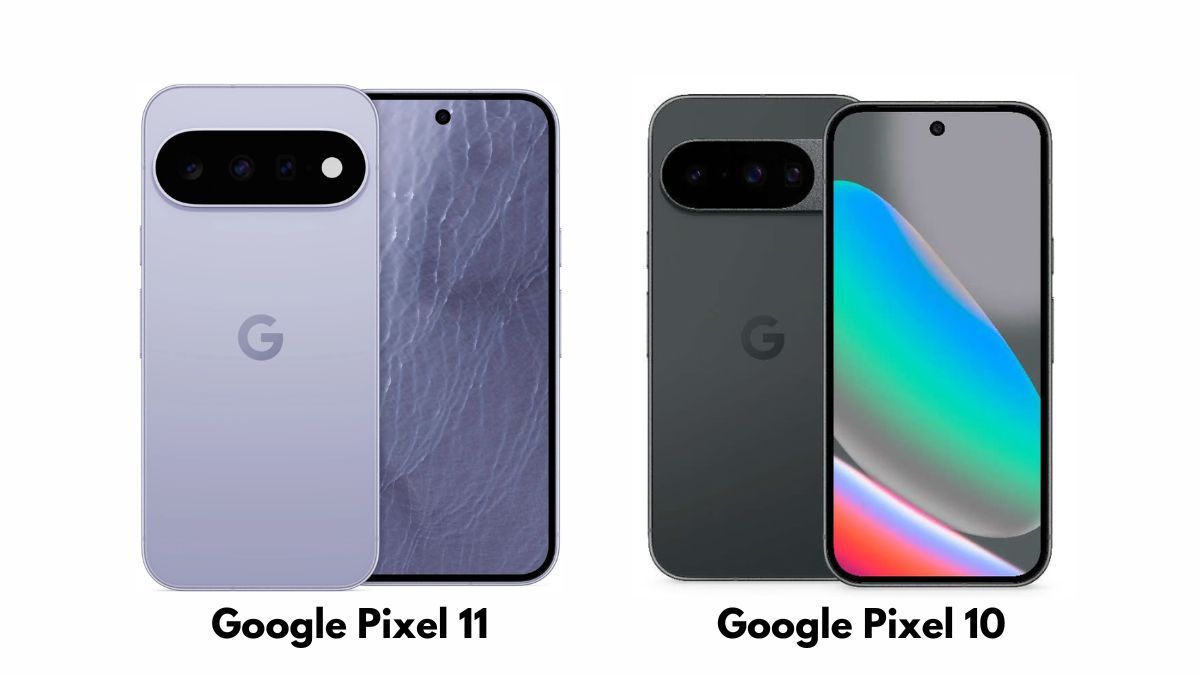
The Pixel 10 is powered by TSMC's 3nm Tensor G5 SoC, delivering a 34–38% performance boost over its predecessor, the Tensor G4. The newer Pixel 11 features the Tensor G6 chipset, which Google claims provides a 25% faster web browsing experience, 15% speedier app launches, and a 50% increase in TPU computation power. Additionally, on-device AI tasks on the Pixel 11 can reportedly run up to 3.5 times faster while using significantly less energy. These improvements underscore Google's ongoing focus on enhancing performance and efficiency, though these claims have not been independently verified.
| Feature | Pixel 10 | Pixel 11 |
|---|---|---|
| Main sensor | 48MP, f/1.7, OIS/PDAF, 1/2" sensor | 48MP, larger 1/1.56" sensor |
| Light sensitivity | Baseline | Claimed 56% more light sensitivity |
| Ultrawide | 13MP, f/2.2 | 13MP, largely unchanged |
| Telephoto | 10.8MP, f/3.1, 5x optical, 1/3.2" sensor | Same 10.8MP/5x optical but bigger 1/1.95" sensor capturing 30% more light |
| Digital/Super Res zoom | 20x | Upgraded to 30x |
| Selfie camera | 10.5MP, Dual Pixel autofocus | 10.5MP ultrawide, autofocus - mostly unchanged |
| Battery | 4,970mAh | 4,985mAh, marginally larger |
| Wireless charging | 15W | 25W Qi2.2 |
| Fingerprint sensor | Optical in-display | Upgraded to ultrasonic in-display |
| Weight | 204g | 197g |
Although megapixel counts remain consistent, the Pixel 11 base model centers its camera improvements around larger sensor sizes and enhanced light sensitivity. Notably, the rumored 50MP sensor did not appear in this generation despite leaks that suggested such a significant jump. The Pixel 11 also dropped the infrared temperature sensor that was present on the Pixel 10, possibly to make way for the new "Pixel Glow" feature.
The Pixel 10 Pro brought innovations like an all-new Image Signal Processor within the Tensor G5 chip, touted by Google as the best smartphone camera for photography at its launch. Advancing this, the Pixel 11 Pro steps up with a 50MP main sensor measuring 1/1.3 inches, allowing more detailed zoom shots. It also features a 48MP ultrawide sensor with autofocus and a larger 48MP telephoto sensor with 5x optical zoom, capturing 32% more light.
Additional enhancements on the Pixel 11 Pro include an expanded Portrait Mode at 5x zoom, Pro Zoom extending to 120x (up from 100x on the Pixel 10 Pro), and Night Sight capturing images up to 4.5 times faster.
Many AI features have been carried over with some rebranding:
Magic Cue (now called Advanced Intelligence) employs on-device AI to proactively deliver relevant information by integrating services like Gmail, Calendar, and Messages.
Camera Coach offers real-time framing, zoom, and angle suggestions, powered by Gemini AI and confirmed for the Pixel 11 Pro model.
Voice Translate supports real-time voice translation while maintaining the user's original voice.
Auto Best Take captures up to 150 frames for selecting the best group photos.
The Gemini Nano model introduced in Tensor G5 runs 2.6 times faster and twice as efficiently compared to previous on-device AI models.
For users interested in maximizing Gmail and Calendar integration, learning how to create a group in Gmail can enhance productivity alongside these AI features.
Several fresh capabilities distinguish the Pixel 11:
Magic Capture lets users snap video and high-quality photos simultaneously with a simple swipe in the Camera app. It automatically crops and removes blurs, extracting the best frames from footage.
Camera Looks provides creative options to apply custom film-style looks to photos.
Instant Night Sight processes night mode images up to 4.5 times faster than previous devices.
HiLight, exclusive to the Pixel 11 Pro, features an LED ring around the flash that glows for favorite contacts' calls and pulses during active Gemini AI tasks.
The Circle to Search feature can now be launched directly from the Camera app, enhancing quick access to information.
A real-time voice teleprompter has been introduced, offering new versatile use cases.
Gemini Intelligence acts as a proactive assistant surpassing traditional chatbot roles, building on Pixel 10's Gemini Live and Magic Cue functionalities.
Those keen on the latest Pixel 11 launch can find detailed information about the series and Tensor G6 chipset improvements in the Google Pixel 11 Series Launch article.
Opinions vary on the necessity of upgrading from Pixel 10 to Pixel 11:
According to Digital Trends, "Coming from a Pixel 10? This is not a worthy upgrade... nothing about the Pixel 11 suddenly makes the 2025 base flagship obsolete."
Android Central also suggests, "If you already have the Pixel 10, there's little reason to upgrade to the Pixel 11."
However, Trusted Reviews highlights that the Pixel 10 struggled with low-light ultrawide shots, resulting in "muddy and over-processed" images. The Pixel 11's 56% improvement in light sensitivity addresses this issue effectively, representing the most significant hardware upgrade.
For additional guidance on selecting the right Pixel model, check the Google Pixel 11 Purchase Guide.
Overall, Pixel 11’s AI enhancements are mostly refinements and rebranding of Pixel 10 features, while the camera hardware improvements, such as larger sensors and improved light sensitivity, offer tangible benefits. This positions the Pixel 11 as a device that blends familiar AI capabilities with meaningful photographic enhancements. Readers interested in comparisons with other flagship devices might also explore the Google Pixel 10 Series vs Samsung Galaxy S25 comparison for broader context.


