
Honkai: Star Rail Version 4.5 Brings Astropolis and Summeretto
Explore the new content, characters, and events in the latest update
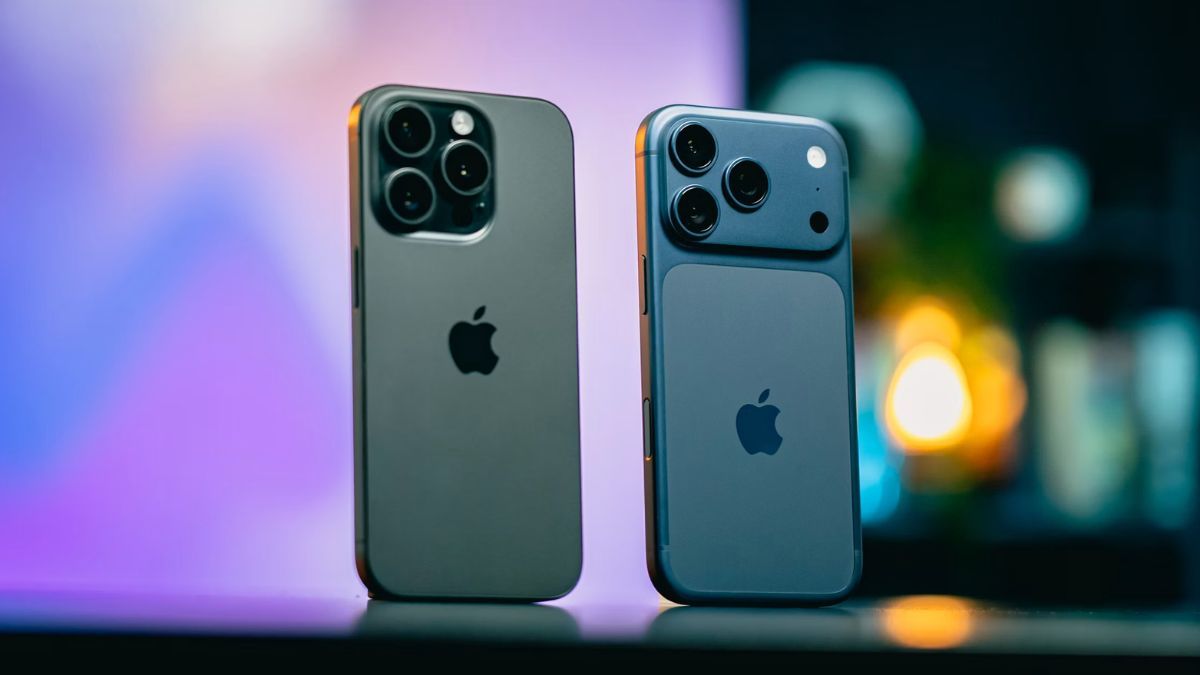
Apple's software has inadvertently exposed the entire iPhone 18 lineup ahead of its official unveiling. The fifth beta of iOS 27, released to developers, contains internal identifiers for all six unreleased iPhone models, marking the first time the complete family appears together in any iOS 27 build. This discovery is more significant because these same six codenames were found in an earlier leaked December 2025 iOS 26 build, showing Apple's sustained work on these models over eight months.
Reported by Filipe Espósito of Macworld, the six internal codes and their expected marketing names, based on previous leaks and Bloomberg's Mark Gurman's reporting, include:
| Internal Code | Expected Device |
|---|---|
| V62 | iPhone Air 2 |
| V63 | iPhone 18 Pro |
| V64 | iPhone 18 Pro Max |
| V67 | iPhone 18 |
| V68 | iPhone Ultra (Foldable) |
| V69 | iPhone 18e |
The six identifiers were confirmed independently by Chance Miller of 9to5Mac from the same beta release.
These identifiers were found within battery driver and Battery Intelligence system files, rather than generic configuration files, which is crucial. Apple's Battery Intelligence system handles managing lithium-ion battery health through device-specific power profiles, adjusting charging patterns, thermal limits, and degradation models per device. For this, the software must identify each device precisely before launch.
Embedding the device identifier within the battery driver reflects that Apple engineers are actively developing device-specific power management code. This stage of software integration indicates a stable hardware design ready for production-level support, a more reliable sign of a device's progress than supply chain leaks. Earlier betas had already revealed code hinting at dual batteries, particularly for the foldable model.
Among the six models, the V68 code associated with the iPhone Ultra foldable draws major attention. It was first linked with dual-battery management code introduced in iOS 27 Beta 4, confirming the handset will feature two battery cells. This design is necessary for foldable phones, which open on a hinge splitting the chassis into two halves. One battery cell per half is standard to avoid mechanical strain.
According to MacRumors' detailed iPhone Ultra guide, foldables balance power across cells with integrated circuits managing charging and capacity. The Beta 5 update adds the foldable's device identifier to the same driver managing all iPhone models, showing the battery system is integrated at the driver level. Moreover, iOS tracks the foldable’s hinge angle, folded state, multi-display support, and independent health for each battery cell.
The presence of all six identifiers in a single beta underlines Apple's plan for a split launch. The group including the iPhone 18 Pro (V63), Pro Max (V64), and foldable Ultra (V68) are expected to debut in fall 2026, probably around September 9, following Apple's usual Labor Day timelines. The other three models (V62 iPhone Air 2, V67 iPhone 18, and V69 iPhone 18e) are likely scheduled for launch in spring 2027, around March, as noted by supply chain sources.
This staggered approach means the more premium fall lineup will start at about $999, while the standard iPhone 18 and budget tiers will arrive later in spring. This strategy echoes the recent split launch seen with the iPhone 17e earlier in 2026 but is unprecedented in withholding an entire base and budget tier from the traditional September event. Buyers on a budget can consider pricier models, look for deals on the iPhone 17, or wait for the spring release.
Learn more about Apple’s evolving release strategies in our detailed Apple’s New iPhone Release Plan: What It Means for You.
Supply chain intel and regulatory filings reveal that the V68 foldable iPhone Ultra will have a 5.5-inch outer display for when closed, and a larger 7.8-inch inner screen with a 4:3 aspect ratio, lending itself to productivity and media viewing. The device is remarkably thin at 4.5 millimeters when unfolded—thinner than any current iPhone or Apple's 13-inch iPad Pro.
Due to this slimness, the TrueDepth camera system for Face ID is omitted. Instead, Touch ID integrated into the power button returns as the authentication method—a first for a top-tier flagship since 2017. The rear camera setup skips a telephoto lens, featuring dual 48-megapixel wide and ultra-wide sensors. It will likely be powered by the A20 Pro chip fabricated with TSMC's advanced 2-nanometer process and paired with 12GB LPDDR5X RAM.
Analysts speculate pricing starts near $1,999, with limited initial supply as predicted by Ming-Chi Kuo, forecasting only half a million to one million units available immediately after launch.
The fall 2026 event is notable beyond products. John Ternus, Apple's long-time hardware engineering head, takes over as CEO on September 1, succeeding Tim Cook. This event will be Ternus’s first as CEO, with the foldable Ultra and iPhone 18 Pro models as highlights.
Apple is also known to be developing future foldables, with the second generation expected in 2027 and a third in 2028, as reported by Bloomberg's Mark Gurman.
These battery driver identifiers demonstrate Apple’s active development on six distinct hardware configurations, enduring through two iOS versions over many months. The foldable’s dual-battery design is integrated at the driver level with the rest of the lineup.
However, these codes do not confirm final naming, pricing, or availability. Sometimes Apple retires device configurations prior to launch. Still, given the timeline and stability shown in the software, official announcements are imminent.
Explore deeper into Apple's device security and innovations with Why the iPhone 17 is the Hardest Phone to Hack and related insights.